Introduction
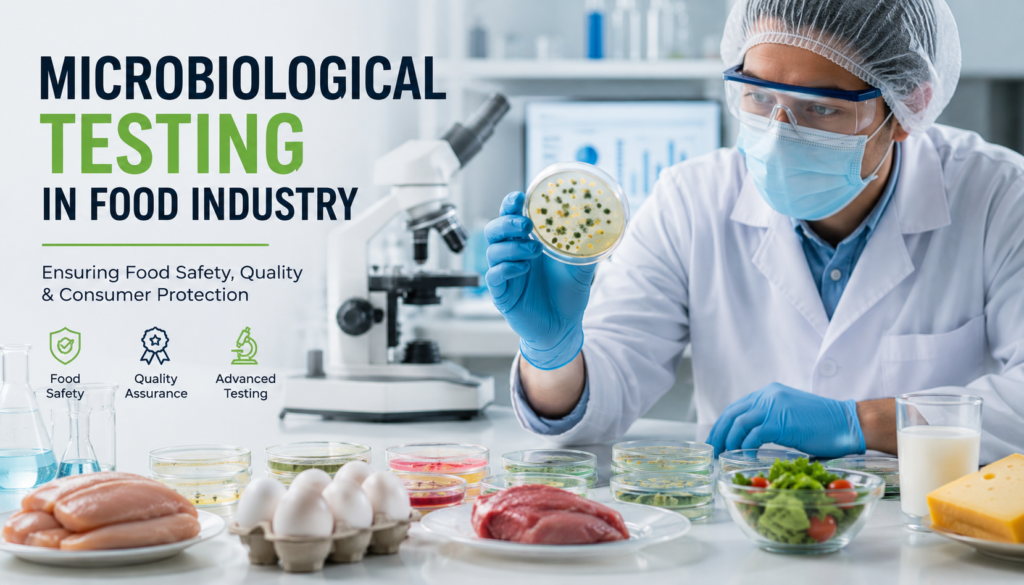
Food safety is a top priority for every food business. Whether you manufacture packaged foods, operate a restaurant, manage a cloud kitchen or run a catering service, ensuring that food products are free from harmful microorganisms is essential. This is where microbiological testing plays a critical role.
Microbiological testing helps food businesses identify potential contamination risks, maintain product quality, improve hygiene standards and protect consumer health. As food safety regulations and customer expectations continue to increase, microbiological testing has become an important part of food quality management systems.
In this guide, we’ll explain what microbiological testing is, why it matters, how it works and how food businesses can benefit from regular microbiological testing.
What Is Microbiological Testing?
Microbiological testing is the process of analyzing food products, raw materials, water, production environments and food contact surfaces to detect and evaluate microorganisms.
The primary objective is to understand the microbial condition of food products and identify contamination concerns before products reach consumers.
Microorganisms may include:
- Bacteria
- Yeasts
- Molds
- Fungi
- Other microbial contaminants
Regular microbiological testing helps businesses assess food safety risks and maintain quality standards throughout the production process.
Why Is Microbiological Testing Important?
Protects Consumer Health
Microbial contamination can lead to food spoilage and foodborne illnesses. Testing helps identify potential concerns before products are distributed or consumed.
Supports Food Safety Programs
Microbiological testing provides valuable information for food safety management systems and quality control programs.
Maintains Product Quality
Microbial growth can affect:
- Taste
- Appearance
- Texture
- Product stability
- Shelf life
Testing helps businesses maintain consistent product quality.
Improves Hygiene Monitoring
Testing can help evaluate hygiene effectiveness within food processing environments and production facilities.
Builds Customer Confidence
Customers trust brands that consistently deliver safe and high-quality food products. Microbiological testing supports that trust by helping businesses maintain strong quality standards.
Common Sources of Microbial Contamination
Food contamination can occur at multiple stages of the food production process.
Raw Materials
Contamination may originate from:
- Agricultural products
- Ingredients
- Water sources
- Packaging materials
Production Equipment
Improperly cleaned equipment may contribute to microbial growth.
Food Handlers
Poor hygiene practices can introduce contamination during food preparation and processing.
Storage Conditions
Inadequate temperature control may encourage microbial growth.
Transportation and Distribution
Improper handling during transportation can affect food quality and safety.
Understanding potential contamination sources helps businesses implement preventive measures.
What Can Microbiological Testing Help Evaluate?
Microbiological testing can support assessment of:
Product Hygiene
Testing helps evaluate overall hygiene conditions associated with food products.
Manufacturing Environment
Environmental monitoring can provide insights into sanitation effectiveness within processing facilities.
Water Quality
Water used in food production can influence product quality and safety.
Shelf Life Performance
Microbial activity is one of the major factors affecting food shelf life.
Process Control
Testing can help identify areas where manufacturing processes may require improvement.
Types of Food Businesses That Benefit from Microbiological Testing
Food Manufacturers
Manufacturers rely on testing to support product quality, process control and food safety objectives.
Restaurants and Cafes
Testing can help support hygiene management practices and food safety programs.
Cloud Kitchens
Microbiological testing helps cloud kitchens maintain food quality and customer confidence.
Catering Companies
Testing can support food safety management during large-scale food preparation operations.
Packaged Food Brands
Packaged food businesses often use microbiological testing to evaluate product stability and shelf life.
Food Startups
Testing provides valuable insights when developing and launching new products.
Benefits of Regular Microbiological Testing
Early Identification of Concerns
Testing helps detect potential issues before they become larger problems.
Better Quality Control
Regular testing supports consistent monitoring and quality improvement.
Reduced Product Risk
Businesses can better understand and manage food safety risks.
Enhanced Brand Reputation
A commitment to food safety helps strengthen customer trust and market credibility.
Improved Operational Confidence
Data-driven decisions support more effective food safety and quality management.
When Should Food Businesses Consider Microbiological Testing?
Food businesses commonly consider microbiological testing during:
- New product development
- Product reformulation
- Shelf life studies
- Routine quality monitoring
- Food safety assessments
- Hygiene improvement initiatives
- Supplier verification programs
A proactive approach to testing often provides better long-term results than reactive problem-solving.
Microbiological Testing and Shelf Life
Shelf life and microbiological quality are closely connected.
Microbial growth can affect:
- Product freshness
- Product stability
- Product quality
- Consumer acceptance
Businesses conducting shelf life studies often include microbiological evaluation as part of the assessment process.
This helps determine how products perform under expected storage conditions.
Best Practices for Food Businesses
To support microbiological quality, food businesses should:
Follow Good Hygiene Practices
Maintain proper cleaning and sanitation procedures throughout the facility.
Train Food Handlers
Regular food safety training helps improve awareness and reduce contamination risks.
Monitor Production Areas
Routine environmental monitoring can help identify potential concerns.
Evaluate Raw Materials
Quality begins with ingredient selection and supplier management.
Conduct Regular Testing
Periodic microbiological testing supports continuous improvement and risk management.
Conclusion
Microbiological testing is an important component of food safety and quality management. It helps businesses understand contamination risks, improve hygiene standards, support shelf life studies and maintain product consistency.
Whether you operate a food manufacturing facility, restaurant, cloud kitchen, catering business or packaged food brand, microbiological testing can provide valuable insights that support better decision-making and stronger customer confidence.
As consumer expectations continue to grow, businesses that invest in food safety and quality management are better positioned for long-term success.
Need Food Testing Support?
OXYPRO helps food businesses understand microbiological testing requirements, food safety concerns, shelf life challenges and quality improvement opportunities. Contact our team to discuss your food testing requirements and identify the right testing support for your business.