Introduction
Food safety is one of the most critical aspects of the food industry. Whether you are a food manufacturer, restaurant owner, catering service provider, cloud kitchen operator or packaged food brand, ensuring the quality and safety of your products is essential for business success. This is where food testing plays a crucial role.
Food testing helps businesses identify potential risks, maintain product quality, comply with regulatory requirements and build customer trust. In today’s competitive food industry, consumers expect safe, high-quality products, making food testing an important part of every food business.
What Is Food Testing?
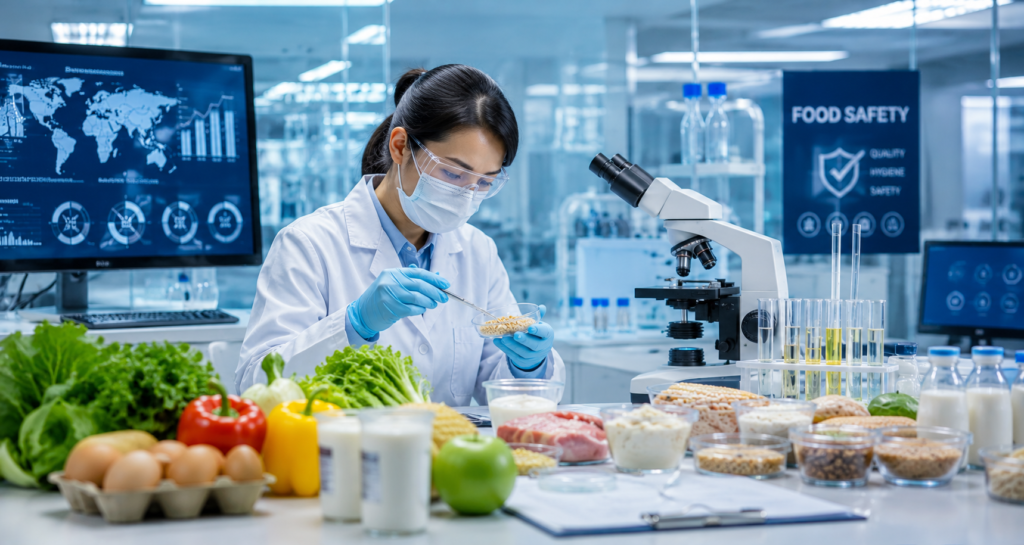
Food testing is the process of analyzing food products to evaluate their quality, safety, composition, nutritional value and suitability for consumption. It helps identify contaminants, microorganisms, adulterants and other factors that may affect food quality and consumer health.
Food testing can be performed at different stages of production, including:
- Raw material inspection
- Production process monitoring
- Finished product evaluation
- Packaging verification
- Shelf life assessment
The objective is to ensure that food products meet quality standards and remain safe for consumers.
Why Is Food Testing Important?
1. Ensures Food Safety
Food products can be exposed to various contaminants during sourcing, processing, storage and transportation. Testing helps identify potential risks before products reach consumers.
Common concerns include:
- Microbial contamination
- Chemical contamination
- Physical impurities
- Environmental contamination
- Cross-contamination during production
Regular food testing helps reduce these risks and supports safer food products.
2. Protects Consumer Health
Unsafe food can lead to foodborne illnesses and health complications. Testing helps businesses detect issues early and take corrective action before products enter the market.
Protecting consumer health is not only a legal responsibility but also an important factor in maintaining a positive brand reputation.
3. Maintains Product Quality
Consistency is essential in the food industry. Customers expect the same taste, texture, appearance and quality every time they purchase a product.
Food testing helps businesses monitor:
- Product consistency
- Ingredient quality
- Manufacturing processes
- Product specifications
This leads to better customer satisfaction and stronger brand loyalty.
4. Supports Regulatory Compliance
Food businesses must comply with food safety regulations and quality standards. Testing provides valuable information that helps businesses maintain proper quality control systems and demonstrate commitment to food safety practices.
Compliance-focused testing can help businesses prepare for inspections, audits and certification requirements.
5. Builds Customer Trust
Consumers are becoming increasingly aware of food quality and safety. Businesses that prioritize food testing demonstrate their commitment to delivering safe and reliable products.
This transparency helps:
- Improve customer confidence
- Strengthen brand credibility
- Reduce customer complaints
- Increase repeat purchases
Types of Food Testing
Microbiological Testing
Microbiological testing evaluates the presence of microorganisms that may affect food safety and quality.
This type of testing helps identify:
- Bacterial contamination
- Yeast and mold concerns
- Hygiene-related issues
- Product safety risks
Nutritional Testing
Nutritional testing helps determine the nutritional composition of food products.
It may include evaluation of:
- Protein content
- Fat content
- Carbohydrates
- Energy values
- Nutritional labeling information
Shelf Life Testing
Shelf life testing helps businesses understand how long a product maintains its quality under specific storage conditions.
Benefits include:
- Product stability evaluation
- Packaging assessment
- Storage recommendations
- Expiry period planning
Chemical Testing
Chemical testing helps identify factors that may impact product quality and safety.
It can support evaluation of:
- Ingredient composition
- Quality parameters
- Product consistency
- Manufacturing performance
Physical Testing
Physical testing focuses on measurable product characteristics.
Examples include:
- Texture
- Appearance
- Moisture content
- Product uniformity
Who Needs Food Testing?
Food testing is beneficial for various food businesses, including:
Food Manufacturers
Manufacturers use testing to maintain product quality, safety and consistency across production batches.
Restaurants and Cafes
Food testing can help support hygiene practices and food safety management systems.
Cloud Kitchens
Cloud kitchens can benefit from testing to improve food quality and maintain customer confidence.
Caterers
Testing helps caterers ensure food safety standards are maintained during large-scale food preparation.
Packaged Food Brands
Packaged food businesses often rely on testing to evaluate shelf life, nutritional information and product quality.
Food Startups
Testing provides valuable insights for businesses launching new food products and entering competitive markets.
Common Food Safety Challenges
Food businesses frequently face challenges such as:
- Maintaining product consistency
- Managing hygiene standards
- Understanding shelf life
- Controlling contamination risks
- Meeting customer expectations
- Improving quality control systems
Food testing provides valuable information that can help businesses address these challenges more effectively.
Benefits of Regular Food Testing
Implementing regular food testing practices offers several advantages:
Better Quality Control
Testing helps identify issues early and supports continuous quality improvement.
Reduced Business Risk
Early detection of quality concerns can help prevent larger operational issues.
Improved Brand Reputation
Consistently safe and high-quality products contribute to stronger customer trust.
Increased Customer Satisfaction
Reliable product quality improves customer experience and encourages repeat business.
Greater Operational Confidence
Testing provides data-driven insights that support informed business decisions.
When Should Food Products Be Tested?
Food testing requirements vary depending on product type, production volume and business objectives. However, businesses commonly consider testing during:
- New product development
- Raw material evaluation
- Production monitoring
- Product reformulation
- Shelf life assessment
- Quality improvement initiatives
- Periodic quality reviews
A proactive testing approach often helps businesses identify opportunities for improvement before problems arise.
Conclusion
Food testing is an essential part of modern food business operations. It helps businesses understand product quality, improve safety practices, maintain consistency and build customer confidence.
Whether you operate a manufacturing facility, restaurant, cloud kitchen, catering service or packaged food brand, investing in food testing can support long-term business growth and product excellence.
As consumer expectations continue to rise, food testing remains one of the most effective ways to demonstrate commitment to quality, safety and continuous improvement.
Need Food Testing Support?
OXYPRO helps food businesses understand testing requirements, quality concerns, shelf life challenges and food safety needs. Contact our team to discuss your food testing requirements and identify the right testing support for your business.