Introduction
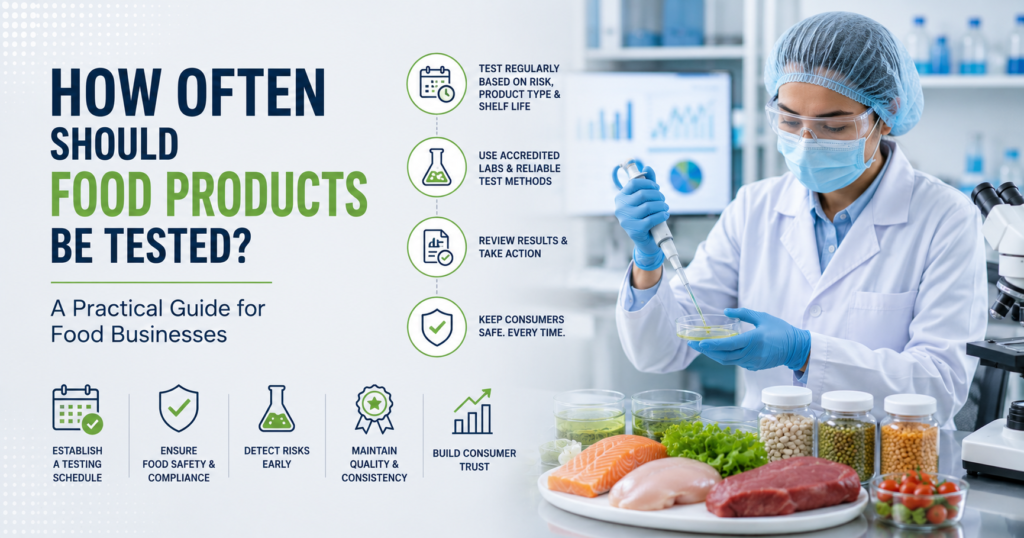
One of the most common questions food businesses ask is: “How often should food products be tested?”
The answer depends on several factors, including the type of food product, manufacturing process, ingredients, production volume, shelf life and quality objectives. While there is no one-size-fits-all testing schedule, regular food testing is an important part of maintaining product quality, food safety and customer confidence.
Whether you are a food manufacturer, restaurant, cloud kitchen, catering company or packaged food brand, understanding when and why to test your products can help reduce risks and improve overall quality management.
This guide explains the factors that influence testing frequency and provides practical recommendations for food businesses.
Why Regular Food Testing Matters?
Food testing is not just about identifying problems. It is a preventive quality management tool that helps businesses understand product performance and maintain consistency.
Regular testing can help:
- Monitor product quality
- Evaluate food safety conditions
- Assess shelf life performance
- Verify manufacturing consistency
- Support quality improvement initiatives
- Build customer confidence
Businesses that test regularly are often better equipped to identify concerns before they affect customers.
Factors That Determine Testing Frequency
Several factors influence how often food products should be tested.
1. Product Type
Different food products present different levels of risk.
Higher-Risk Products
Examples include:
- Dairy products
- Meat products
- Seafood products
- Ready-to-eat foods
- Fresh foods
These products often require more frequent monitoring due to their susceptibility to spoilage and contamination.
Lower-Risk Products
Examples include:
- Dry foods
- Certain packaged snacks
- Low-moisture products
Testing schedules may vary depending on product characteristics and manufacturing conditions.
2. Production Volume
Businesses producing large quantities of food generally benefit from more frequent testing.
Higher production volumes may increase:
- Product variability
- Quality control challenges
- Risk exposure
Regular testing provides additional confidence that products remain consistent across production batches.
3. Product Shelf Life
Shelf life directly influences testing requirements.
Products with longer shelf lives may require additional evaluation to understand how quality changes over time.
Testing can help assess:
- Product stability
- Packaging performance
- Storage conditions
- Product consistency throughout shelf life
4. Manufacturing Process
Complex manufacturing processes often require more frequent monitoring.
Factors may include:
- Multiple production stages
- Numerous ingredients
- Specialized processing methods
- High production speeds
The more variables involved, the more valuable regular testing becomes.
5. Quality Objectives
Some businesses test more frequently because quality is a key competitive advantage.
Premium food brands often use testing to:
- Maintain consistency
- Improve customer satisfaction
- Protect brand reputation
- Support product innovation
When Should Food Products Be Tested?
During New Product Development
Before launching a new product, testing can help businesses understand:
- Product performance
- Ingredient interactions
- Quality characteristics
- Shelf life expectations
Testing during development helps identify improvement opportunities before commercialization.
Before Product Launch
Testing before market introduction provides valuable insights into product quality and consistency.
Benefits include:
- Increased confidence
- Better understanding of product behavior
- Improved quality assurance
During Routine Production
Routine production testing helps monitor ongoing product quality and process performance.
Regular monitoring can support:
- Consistency
- Quality control
- Continuous improvement
After Product Reformulation
Changes in ingredients or processing methods may affect product quality.
Testing after reformulation helps businesses understand how modifications influence product performance.
During Shelf Life Studies
Shelf life evaluations often involve periodic testing throughout the product’s storage period.
This helps assess:
- Product stability
- Quality retention
- Consumer acceptability
Following Quality Concerns
Businesses may also conduct testing when:
- Customer complaints increase
- Product performance changes
- Quality concerns arise
- Process deviations occur
Testing can help identify possible causes and support corrective actions.
Common Types of Food Testing
Depending on business needs, testing may include:
Microbiological Testing
Helps evaluate microbial conditions and hygiene-related concerns.
Nutritional Testing
Supports nutritional information and product composition evaluation.
Shelf Life Testing
Assesses product stability and storage performance.
Physical Testing
Evaluates characteristics such as:
- Appearance
- Texture
- Consistency
- Moisture
Quality Assessment
Supports product performance monitoring and continuous improvement initiatives.
Signs Your Food Business May Need More Frequent Testing
Consider increasing testing frequency if you experience:
Product Inconsistency
Changes in taste, texture, appearance, or quality.
Customer Complaints
Repeated complaints may indicate underlying quality concerns.
Rapid Business Growth
Increased production often creates new quality management challenges.
New Suppliers
Changes in raw material sources may influence product performance.
Process Changes
Modified manufacturing procedures may affect quality outcomes.
Shelf Life Concerns
Unexpected spoilage or reduced stability may require further evaluation.
Benefits of Establishing a Testing Program
A structured testing program can provide:
Better Quality Control
Regular monitoring supports consistent product performance.
Reduced Risk
Early identification of concerns can prevent larger issues.
Improved Decision-Making
Testing data supports more informed business decisions.
Stronger Brand Reputation
Consumers value businesses that prioritize quality and food safety.
Continuous Improvement
Regular evaluation creates opportunities for ongoing enhancement.
Choosing the Right Testing Schedule
Rather than asking “How often should we test?” businesses should ask:
What are we trying to achieve?
The answer depends on:
- Product type
- Risk profile
- Production volume
- Quality goals
- Business objectives
An effective testing strategy should align with the unique requirements of each business.
Conclusion
Food testing is one of the most valuable tools available to food businesses seeking to improve quality, maintain consistency and strengthen food safety practices.
While testing frequency varies depending on product type and operational needs, regular testing provides valuable insights that support better decision-making and long-term success.
Businesses that adopt a proactive approach to food testing are often better positioned to manage risks, satisfy customers and maintain strong product quality standards.
Need Food Testing Support?
OXYPRO helps food manufacturers, packaged food brands, restaurants, cloud kitchens and food startups understand food testing requirements, shelf life concerns, quality challenges and food safety objectives. Contact our team to discuss the right testing approach for your business.