Introduction
Food testing is essential for ensuring product safety, meeting regulatory requirements and maintaining consumer trust. However, choosing the right food testing laboratory is just as important as conducting the tests themselves.
With hundreds of laboratories offering food testing services, selecting the right partner can be challenging. The wrong choice may lead to inaccurate results, delays in product launches or compliance issues.
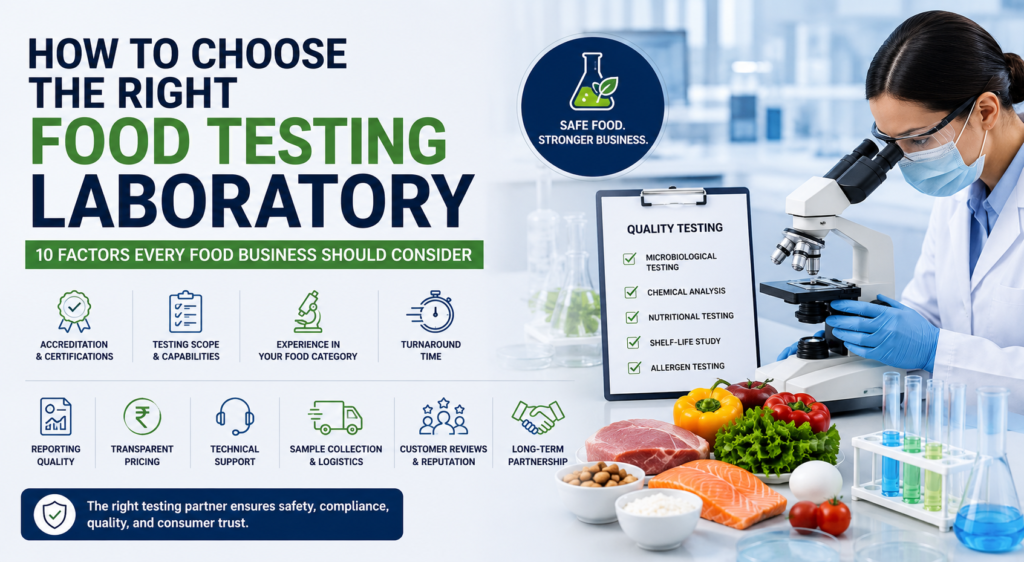
In this guide, we’ll discuss the ten most important factors every food manufacturer, food startup, restaurant, exporter and food processing company should consider before selecting a food testing laboratory.
Why Choosing the Right Laboratory Matters?
A reliable laboratory helps businesses:
- Ensure food safety
- Meet FSSAI compliance requirements
- Improve product quality
- Avoid costly recalls
- Build customer confidence
- Support product exports
- Speed up product launches
A trusted testing partner becomes an important part of your quality assurance process.
1. Check Laboratory Accreditation
Always verify whether the laboratory is accredited by recognized authorities.
Look for certifications such as:
- NABL Accreditation
- ISO/IEC 17025
Accreditation demonstrates that the laboratory follows internationally accepted testing standards and maintains technical competence.
2. Ensure the Laboratory Offers Required Tests
Not every laboratory performs every type of food analysis.
Confirm they provide:
- Microbiological Testing
- Chemical Testing
- Nutritional Analysis
- Shelf-Life Testing
- Water Testing
- Allergen Testing
- Heavy Metal Testing
- Packaging Testing
Choosing one laboratory that offers multiple services saves both time and effort.
3. Evaluate Experience in Your Food Category
Testing requirements vary depending on the product.
Look for laboratories experienced in testing:
- Dairy products
- Bakery products
- Snacks
- Beverages
- Spices
- Ready-to-eat foods
- Frozen foods
- Nutraceuticals
Industry-specific expertise often leads to more accurate guidance and better testing recommendations.
4. Consider Turnaround Time
Fast and reliable reporting is essential when launching new products or meeting regulatory deadlines.
Ask questions such as:
- How long will testing take?
- Do they offer urgent testing?
- Can reports be delivered digitally?
Shorter turnaround times can help reduce delays in production and product launches.
5. Review Reporting Quality
A professional laboratory should provide reports that are:
- Easy to understand
- Accurate
- Comprehensive
- Accepted by regulatory authorities
Clear reports make audits and inspections much easier.
6. Compare Pricing—But Don’t Choose Based Only on Cost
The lowest-priced laboratory is not always the best option.
Instead, compare:
- Scope of testing
- Quality assurance
- Accreditation
- Customer support
- Report accuracy
- Turnaround time
Good testing is an investment in your brand’s reputation.
7. Ask About Technical Support
A good laboratory doesn’t simply provide test reports.
They should also help you:
- Understand results
- Identify quality issues
- Recommend corrective actions
- Explain compliance requirements
Expert guidance adds significant value beyond the testing itself.
8. Check Sample Collection and Logistics
Convenient sample handling can save valuable time.
Many laboratories offer:
- Sample pickup
- Courier coordination
- Proper sample handling procedures
- Cold-chain transportation for sensitive products
Reliable logistics ensure sample integrity and accurate results.
9. Read Customer Reviews and Testimonials
Before making a decision, look for feedback from other food businesses.
Positive reviews often indicate:
- Reliable service
- Accurate testing
- Timely reporting
- Professional customer support
Consistent customer satisfaction is a strong indicator of laboratory quality.
10. Choose a Long-Term Testing Partner
Food testing is not a one-time activity.
Businesses often require:
- Routine quality testing
- Batch testing
- Shelf-life studies
- Product development support
- Regulatory compliance testing
Building a long-term relationship with a trusted laboratory ensures consistency and saves time as your business grows.
Common Mistakes to Avoid
Many food businesses make these mistakes:
- Choosing the cheapest laboratory without checking accreditation
- Ignoring turnaround times
- Not verifying testing capabilities
- Overlooking customer support
- Using different laboratories for related tests without a clear reason
Avoiding these pitfalls can improve efficiency and reduce compliance risks.
Conclusion
Choosing the right food testing laboratory is a critical decision that directly impacts product safety, regulatory compliance and customer confidence.
By considering factors such as accreditation, expertise, testing scope, turnaround time, reporting quality and technical support, businesses can select a laboratory that meets both current and future needs.
A reliable testing partner not only delivers accurate results but also helps your business maintain high-quality standards and build lasting consumer trust.
Need dependable food testing services?
Contact our experts today to discuss your testing requirements and find the right solutions for your products.