Introduction
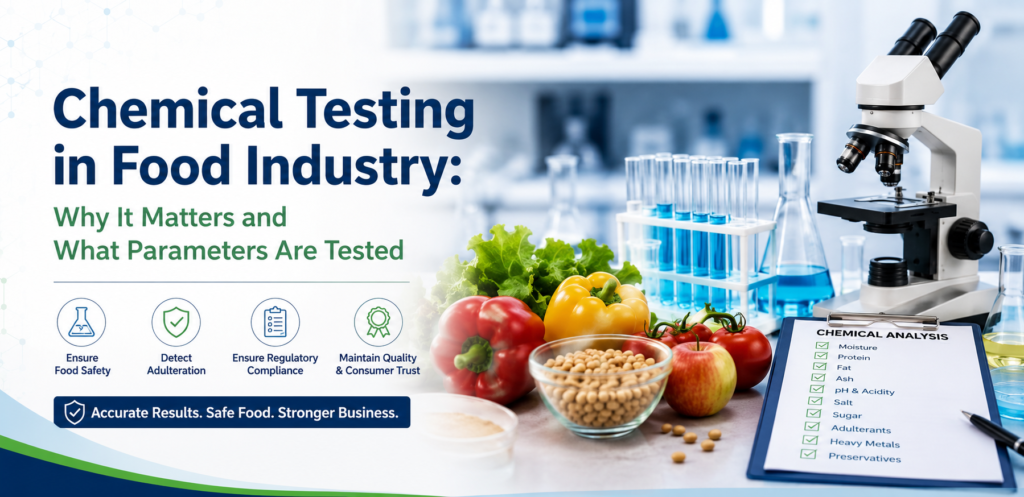
Food safety goes beyond checking for bacteria and microorganisms. Chemical contaminants, adulterants, preservatives, pesticide residues, heavy metals and nutritional composition all play a crucial role in determining whether a food product is safe for consumption.
Chemical testing is one of the most important laboratory services used by food manufacturers to ensure product quality, comply with FSSAI regulations and maintain consumer trust. Whether you manufacture dairy products, spices, snacks, beverages or packaged foods, chemical analysis helps verify that your products meet legal and quality standards.
In this guide, we’ll explain what chemical testing is, why it’s important and the most common parameters tested in food products.
What is Chemical Testing in Food?
Chemical testing is the laboratory analysis of food to determine its chemical composition, detect contaminants, verify nutritional values and ensure compliance with food safety regulations.
It helps identify substances that cannot be detected through visual inspection alone.
Why is Chemical Testing Important?
Chemical testing helps businesses:
- Ensure food safety
- Meet FSSAI compliance
- Verify nutritional labels
- Detect adulteration
- Improve product consistency
- Maintain customer trust
- Support exports
- Reduce product recalls
Common Chemical Parameters Tested
1. Moisture Content
Moisture affects shelf life, texture, and microbial growth.
Used for:
- Spices
- Flour
- Snacks
- Grains
2. Protein Content
Protein analysis confirms nutritional value and label accuracy.
Commonly tested in:
- Dairy
- Pulses
- Protein supplements
- Animal feed
3. Fat Content
Fat testing helps maintain product consistency and ensure accurate nutritional labelling.
Applicable for:
- Milk
- Butter
- Cheese
- Bakery products
4. Ash Content
Ash indicates the total mineral content present in food.
Used in quality control for:
- Flour
- Cereals
- Animal feed
5. pH and Acidity
These parameters influence:
- Taste
- Shelf life
- Preservation
- Microbial growth
6. Salt Content
Salt analysis ensures proper formulation and labelling.
Important for:
- Pickles
- Snacks
- Processed foods
7. Sugar Analysis
Sugar testing verifies sweetness levels and nutritional claims.
Used in:
- Juices
- Soft drinks
- Confectionery
- Bakery products
Detection of Food Adulteration
Chemical analysis helps detect adulterants such as:
- Synthetic colours
- Artificial sweeteners
- Excess preservatives
- Industrial chemicals
- Non-permitted additives
This protects both consumers and manufacturers.
Industries That Require Chemical Testing
Chemical testing is essential for:
- Dairy manufacturers
- Spice exporters
- Snack manufacturers
- Beverage companies
- Restaurants
- Hotels
- Packaged food brands
- Food startups
When Should Food Products Be Chemically Tested?
Testing is recommended:
- Before product launch
- During routine production
- After recipe changes
- Before exports
- During shelf-life studies
- For regulatory compliance
Benefits of Regular Chemical Testing
- Better quality control
- Accurate nutritional labels
- Reduced recalls
- Compliance with regulations
- Improved customer confidence
- Stronger brand reputation
Conclusion
Chemical testing is an essential part of any food quality assurance program. It helps businesses verify product composition, detect contaminants, comply with regulations and ensure that consumers receive safe, high-quality food products.
By partnering with a reliable NABL-accredited food testing laboratory, manufacturers can maintain consistent quality while building trust in their brand.