Introduction
Every packaged food product has a limited lifespan. Whether it’s snacks, dairy products, beverages, spices, bakery items or ready-to-eat meals, consumers expect food to remain safe, fresh and high in quality until the expiry date.
Determining the expiry date isn’t based on guesswork. It requires scientific evaluation through shelf-life testing.
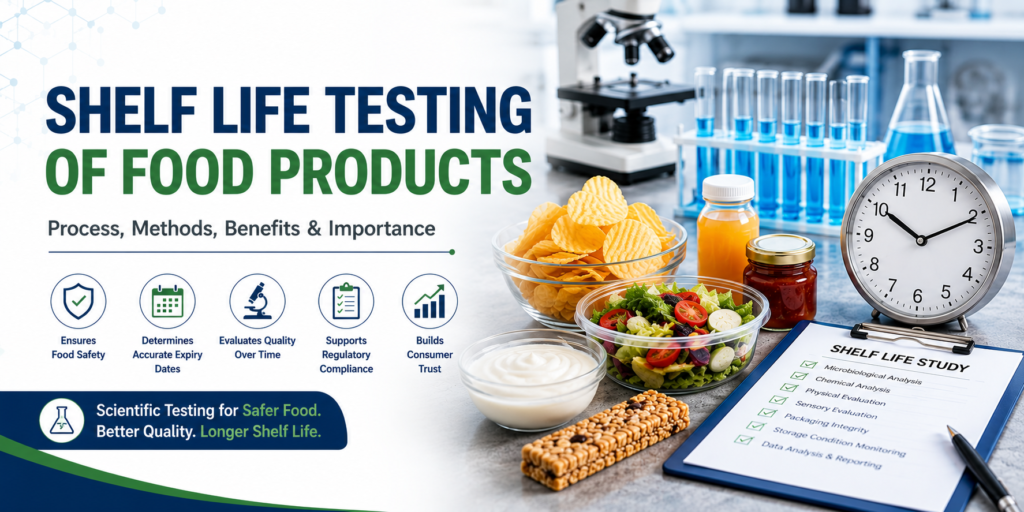
Shelf-life testing helps food manufacturers determine how long a product remains safe, nutritious, and acceptable under recommended storage conditions. It is an essential part of quality assurance, regulatory compliance and consumer protection.
In this guide, we’ll explain what shelf-life testing is, how it’s performed, why it matters and which food products require it.
What Is Shelf-Life? Testing?
Shelf-life testing is the scientific process of evaluating how long a food product maintains its:
- Safety
- Quality
- Taste
- Texture
- Appearance
- Nutritional value
Under specified storage conditions.
The results help manufacturers establish accurate Best Before or Use By dates.
Why Is Shelf Life Testing Important?
Shelf life testing helps businesses:
- Ensure food safety
- Determine accurate expiry dates
- Reduce product recalls
- Minimize food waste
- Meet FSSAI requirements
- Improve customer satisfaction
- Enhance brand reputation
Factors That Affect Shelf Life
Several factors influence how long food products remain safe and fresh:
1. Moisture Content
Higher moisture levels encourage microbial growth and spoilage.
2. Storage Temperature
Temperature fluctuations can accelerate chemical reactions and microbial activity.
3. Packaging Quality
Proper packaging protects food from oxygen, moisture, light, and contaminants.
4. Product Ingredients
Natural and processed ingredients have different stability characteristics.
5. Manufacturing Process
Good manufacturing practices improve product stability and consistency.
Types of Shelf Life Testing
Real-Time Shelf Life Testing
Products are stored under normal conditions and tested periodically until they reach the end of their usable life.
Best for:
- Long-term validation
- Accurate shelf life determination
Accelerated Shelf Life Testing
Products are stored under elevated temperature or humidity to speed up the aging process.
Benefits:
- Faster results
- Ideal for product development
- Reduces time to market
Tests Performed During Shelf Life Studies
Laboratories evaluate products through multiple analyses, including:
Microbiological Testing
Checks for bacteria, yeast, mould, and pathogens.
Chemical Testing
Measures pH, moisture, acidity, oxidation and nutrient stability.
Physical Testing
Evaluates:
- Texture
- Color
- Appearance
- Viscosity
- Weight changes
Sensory Evaluation
Assesses:
- Taste
- Aroma
- Mouthfeel
- Consumer acceptability
Food Products That Require Shelf Life Testing
Shelf life testing is recommended for:
- Dairy products
- Bakery items
- Snacks
- Ready-to-eat foods
- Frozen foods
- Beverages
- Spices
- Pickles
- Sauces
- Confectionery
- Nutritional supplements
Benefits of Shelf Life Testing
Regular shelf life studies help businesses:
- Launch products confidently
- Improve packaging decisions
- Optimize formulations
- Reduce wastage
- Strengthen quality control
- Build customer trust
How Often Should Shelf Life Be Revalidated?
Manufacturers should review shelf life whenever there are changes in:
- Ingredients
- Formulation
- Packaging material
- Manufacturing process
- Storage conditions
- Suppliers
Periodic revalidation also helps maintain compliance with evolving regulations.
Choosing the Right Laboratory
Select a laboratory that offers:
- NABL accreditation
- Experienced food scientists
- Advanced analytical equipment
- Microbiological, chemical and sensory testing capabilities
- Detailed technical reports
- Timely turnaround
A reliable laboratory can provide accurate data to support product labelling and market confidence.
Conclusion
Shelf-life testing is more than just assigning an expiry date—it ensures that consumers receive food that is safe, high-quality and enjoyable throughout its intended lifespan. By understanding how products change over time, food businesses can improve quality, reduce waste and comply with regulatory requirements.
Whether you’re launching a new product or refining an existing one, investing in scientific shelf-life testing is a key step toward long-term success.