
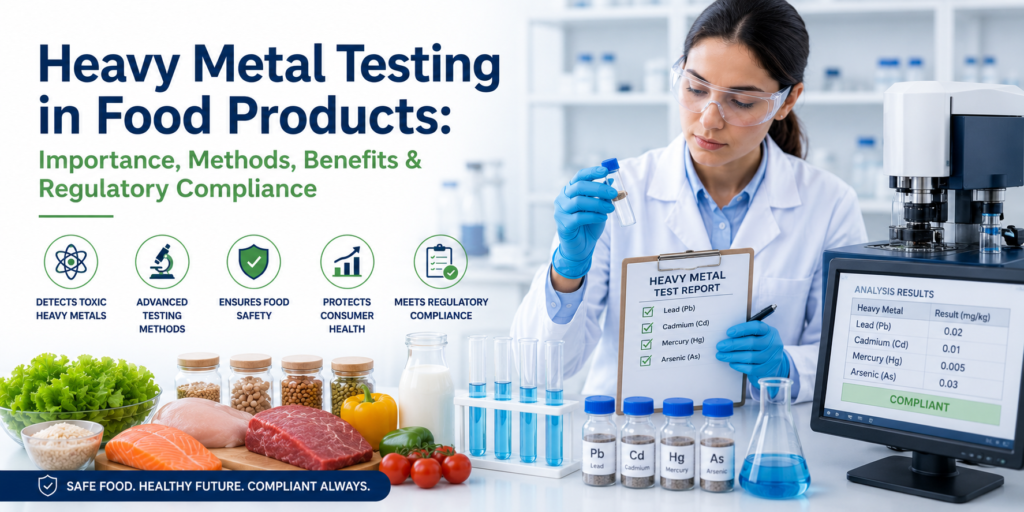
Heavy Metal Testing in Food Products: Protecting Consumer Health and Food Safety
Food safety is one of the most important responsibilities of every food manufacturer. While nutritional quality and microbiological safety receive significant attention, contamination from heavy metals is another critical concern that can pose serious health risks to consumers.
Heavy metals can enter food through contaminated soil, irrigation water, industrial pollution, pesticides, processing equipment, packaging materials or environmental exposure. Even small amounts may accumulate in the human body over time, making regular heavy metal testing in food products essential.
Laboratory testing helps manufacturers detect harmful metals, comply with food safety regulations and ensure that products reaching consumers are safe and of high quality.
What is Heavy Metal Testing in Food?
Heavy metal testing is the laboratory analysis of food products to detect and measure potentially harmful metallic contaminants. Advanced analytical instruments are used to identify trace levels of metals and determine whether they are within permissible limits.
The results help manufacturers maintain food safety, meet regulatory requirements and protect consumer health.
Why is Heavy Metal Testing Important?
Regular heavy metal testing provides several important benefits:
- Protects consumer health
- Detects contamination early
- Supports food safety programs
- Meets regulatory requirements
- Improves export compliance
- Prevents costly product recalls
- Enhances quality assurance
- Builds consumer trust
- Protects brand reputation
Common Heavy Metals Tested in Food
Food laboratories commonly test for the following metals:
1. Lead (Pb)
Lead contamination may occur through environmental pollution, water, processing equipment, or packaging materials. Excessive exposure can pose significant health concerns.
2. Arsenic (As)
Arsenic may be naturally present in soil and groundwater or introduced through environmental contamination. Certain food categories require routine monitoring due to their potential exposure.
3. Cadmium (Cd)
Cadmium can accumulate in agricultural soil and be absorbed by crops. Monitoring helps manufacturers ensure products remain within acceptable safety limits.
4. Mercury (Hg)
Mercury testing is particularly important for seafood and certain aquatic food products where environmental contamination may occur.
Food Products That Commonly Require Heavy Metal Testing
Heavy metal analysis is recommended for a wide variety of products, including:
- Rice and cereals
- Fruits and vegetables
- Spices
- Milk and dairy products
- Baby foods
- Seafood and fish
- Edible oils
- Tea and coffee
- Packaged foods
- Health supplements
- Nutraceutical products
- Herbal products
- Processed foods
Laboratory Methods Used for Heavy Metal Testing
Accredited laboratories use advanced analytical techniques capable of detecting metals at very low concentrations. These methods provide accurate, reliable, and reproducible results suitable for regulatory compliance and quality assurance.
Testing is performed under controlled laboratory conditions following validated analytical procedures.
Benefits of Heavy Metal Testing
Routine laboratory testing helps food businesses:
- Improve food safety
- Detect contamination before products reach the market
- Support regulatory compliance
- Reduce recall risks
- Maintain consistent product quality
- Meet export requirements
- Strengthen supplier quality programs
- Increase consumer confidence
- Protect business reputation
When Should Heavy Metal Testing Be Performed?
Manufacturers should conduct heavy metal testing:
- Before launching a new product
- During routine quality control
- After changing raw material suppliers
- Before export shipments
- When sourcing ingredients from new regions
- As part of periodic food safety verification
- Whenever required by customers or regulatory authorities
Routine monitoring helps identify contamination before products enter the supply chain.
Choosing the Right Heavy Metal Testing Laboratory
When selecting a laboratory, look for:
- Laboratory accreditation
- Experienced analytical scientists
- Advanced instrumentation
- Reliable and accurate reporting
- Fast turnaround times
- Technical expertise
- Comprehensive food testing services
- Regulatory support
A qualified laboratory helps manufacturers maintain consistent compliance and product quality.
Conclusion
Heavy metal contamination is an important food safety concern that should never be overlooked. Regular heavy metal testing in food products enables manufacturers to detect contaminants, comply with food safety requirements and deliver safe, high-quality products to consumers.
By incorporating heavy metal testing into routine quality assurance programs, food businesses can reduce risks, strengthen compliance, improve customer confidence and protect their brand reputation.