
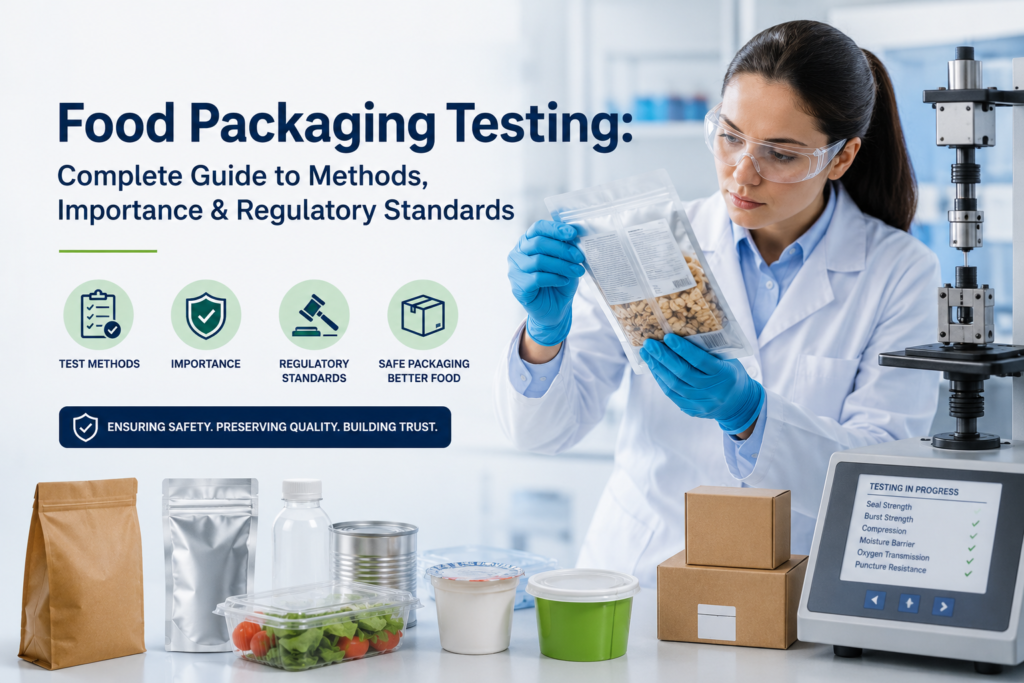
Food Packaging Testing: Protecting Food Quality from Factory to Consumer
Food packaging does much more than make products look attractive on store shelves. It protects food from contamination, extends shelf life, preserves freshness, and ensures consumers receive safe, high-quality products.
However, even the best food product can become unsafe if the packaging material fails. That’s why food packaging testing is an essential part of food quality assurance and regulatory compliance.
Whether you manufacture snacks, dairy products, beverages, frozen foods, spices, bakery items or ready-to-eat meals, proper food packaging testing helps prevent contamination, product spoilage, leakage and customer complaints.
In this guide, we’ll explain everything you need to know about food packaging testing, its methods, importance and how it protects your brand.
What is Food Packaging Testing?
Food packaging testing is the scientific evaluation of packaging materials to ensure they safely protect food throughout manufacturing, transportation, storage and consumption.
The testing verifies that the packaging:
- Maintains food quality
- Prevents contamination
- Preserves freshness
- Meets regulatory requirements
- Withstands transportation
- Does not react with food
The goal is to ensure that packaging performs effectively during the product’s entire shelf life.
Why is Food Packaging Testing Important?
Food packaging directly influences food safety and product quality. Poor-quality packaging can cause:
- Leakage
- Moisture absorption
- Oxygen entry
- Chemical migration
- Loss of freshness
- Product spoilage
- Consumer health risks
- Brand reputation damage
Proper food packaging testing minimizes these risks while improving customer confidence.
Types of Food Packaging Testing:-
1. Physical Testing
Physical tests determine the strength and durability of packaging materials.
Common tests include:
- Tensile Strength
- Burst Strength
- Compression Test
- Drop Test
- Seal Strength
- Puncture Resistance
These tests ensure packaging can withstand transportation and handling.
2. Barrier Property Testing
Barrier testing measures how effectively packaging blocks external elements.
Parameters include:
- Oxygen Transmission Rate (OTR)
- Water Vapour Transmission Rate (WVTR)
- Moisture Barrier
- Gas Permeability
Good barrier properties significantly improve shelf life.
3. Migration Testing
Migration testing determines whether harmful chemicals transfer from packaging into food.
This includes testing for:
- Heavy Metals
- Plasticizers
- Printing Ink Components
- Adhesives
- Chemical Residues
Migration testing is critical for consumer safety and regulatory compliance.
4. Seal Integrity Testing
Poor seals can allow contamination and air leakage.
Seal testing evaluates:
- Seal strength
- Leak resistance
- Vacuum retention
- Heat seal quality
Proper sealing keeps products fresh throughout distribution.
5. Packaging Compatibility Testing
Different foods interact differently with packaging materials.
Compatibility testing checks whether packaging is suitable for:
- Acidic foods
- Oily foods
- Frozen foods
- Dairy products
- Beverages
- High-fat foods
This ensures packaging remains stable throughout the product lifecycle.
6. Environmental Testing
Packaging experiences different environmental conditions during storage and transport.
Environmental tests simulate:
- High temperature
- Low temperature
- Humidity
- UV exposure
- Transportation stress
These tests help manufacturers choose the right packaging material.
Common Packaging Materials That Require Testing
Packaging testing applies to many materials, including:
- Plastic containers
- PET bottles
- Glass bottles
- Metal cans
- Aluminium foil
- Flexible pouches
- Paper packaging
- Laminated films
- Corrugated boxes
- Vacuum packaging
Each material has unique performance requirements.
Industries That Need Food Packaging Testing
Nearly every food sector benefits from food packaging testing, including:
- Dairy Industry
- Bakery Products
- Snack Foods
- Frozen Foods
- Ready-to-Eat Meals
- Beverages
- Spices
- Dry Fruits
- Confectionery
- Nutraceutical Products
- Edible Oils
- Seafood Processing
Benefits of Food Packaging Testing
Regular food packaging testing offers several advantages:
- Improves food safety
- Extends shelf life
- Reduces product recalls
- Prevents leakage
- Ensures packaging durability
- Meets national and international standards
- Builds consumer trust
- Supports export compliance
- Minimizes product wastage
- Protects brand reputation
Testing is a valuable investment that reduces long-term costs and risks.
Regulatory Standards for Food Packaging Testing
Food packaging should comply with applicable regulatory requirements and industry standards. Testing helps manufacturers demonstrate compliance with relevant food-contact material regulations and quality standards required by domestic and export markets.
Maintaining proper documentation also supports inspections, audits and customer requirements.
How Often Should Packaging Be Tested?
Packaging should be tested:
- Before launching a new product
- When changing packaging suppliers
- After modifying packaging materials
- During routine quality audits
- Before export shipments
- Whenever regulatory requirements change
Periodic testing helps identify issues before products reach consumers.
Choosing the Right Food Packaging Testing Laboratory
When selecting a laboratory, consider:
- Accreditation
- Experienced technical team
- Modern testing equipment
- Comprehensive testing services
- Quick turnaround time
- Regulatory expertise
- Reliable reporting
- Technical support
Working with an experienced laboratory ensures accurate and dependable results.
Conclusion
Packaging is one of the most critical components of food safety and product quality. Effective food packaging testing ensures that packaging materials protect food from contamination, maintain freshness and comply with applicable standards.
By investing in regular food packaging testing, manufacturers can improve product quality, reduce business risks, increase customer confidence and strengthen their brand reputation in competitive markets.
If your business manufactures or packages food products, routine packaging testing should be an essential part of your quality assurance program.