
Introduction
Launching a food product involves much more than creating a delicious recipe. Before reaching consumers, every product should undergo thorough testing to ensure it is safe, compliant and maintains its quality throughout its shelf life.
Whether you’re a food manufacturer, restaurant chain, cloud kitchen, bakery, beverage company or startup, understanding the different types of food testing helps you make informed decisions and meet regulatory requirements.
In this guide, we’ll explain the essential food product tests and why they matter.
Why Food Product Testing Matters
Food testing is the scientific process of evaluating food products for safety, quality, nutritional value and regulatory compliance.
Proper testing helps businesses:
- Ensure consumer safety
- Meet FSSAI and international standards
- Prevent costly product recalls
- Validate shelf life
- Maintain consistent product quality
- Build consumer trust
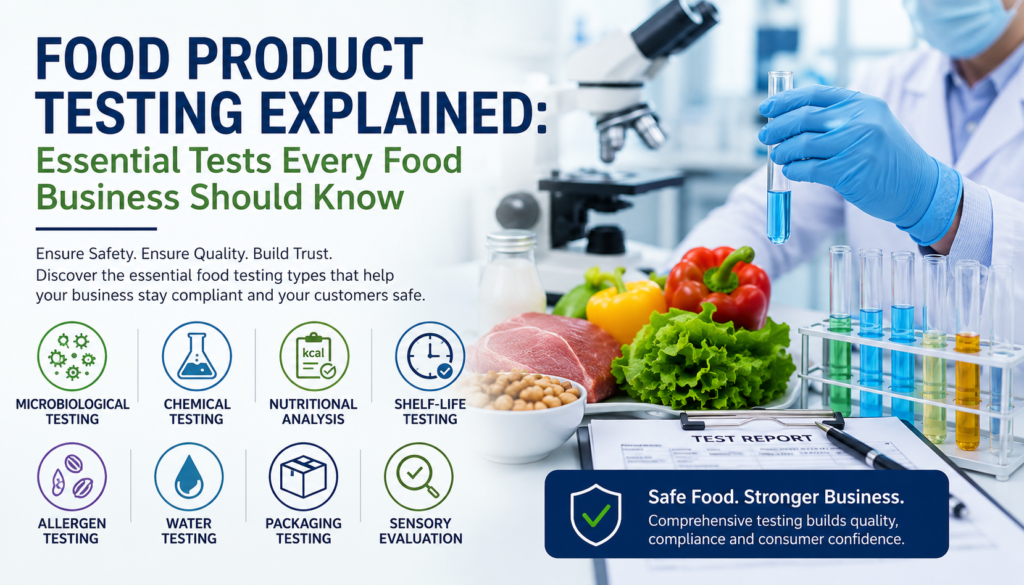
1. Microbiological Testing
Microbiological testing detects harmful microorganisms that can cause foodborne illnesses.
Common tests include:
- Salmonella
- E. coli
- Listeria
- Yeast and Mold
- Total Plate Count (TPC)
- Coliform Count
This testing is essential for:
- Dairy products
- Meat and seafood
- Ready-to-eat foods
- Bakery products
- Frozen foods
- Beverages
2. Chemical Testing
Chemical analysis ensures that food products meet safety standards and do not contain harmful contaminants.
Typical parameters include:
- Pesticide residues
- Heavy metals (Lead, Arsenic, Mercury, Cadmium)
- Preservative levels
- Artificial colors
- Sweeteners
- Food additives
Chemical testing is especially important for processed foods, fruits, vegetables, spices and beverages.
3. Nutritional Analysis
Consumers increasingly expect accurate nutrition labels.
Nutritional testing measures:
- Calories
- Protein
- Fat
- Carbohydrates
- Sugar
- Dietary Fiber
- Sodium
- Vitamins and Minerals
Accurate nutritional information helps businesses comply with labelling regulations while supporting informed consumer choices.
4. Shelf-Life Testing
Shelf-life testing determines how long a product remains safe and maintains its intended quality under specific storage conditions.
The process evaluates:
- Microbial growth over time
- Packaging performance
- Moisture changes
- Taste and texture stability
- Color changes
- Product freshness
This testing helps businesses establish realistic “Best Before” or “Use By” dates.
5. Allergen Testing
Undeclared allergens are one of the leading causes of food recalls worldwide.
Testing commonly covers:
- Milk
- Peanuts
- Tree Nuts
- Soy
- Wheat (Gluten)
- Egg
- Fish
- Shellfish
Routine allergen testing supports accurate labelling and protects sensitive consumers.
6. Water Testing
Water is a key ingredient in many food manufacturing processes.
Testing verifies:
- Microbiological quality
- Chemical contaminants
- pH
- Total Dissolved Solids (TDS)
- Heavy metals
Safe water is critical for maintaining food safety throughout production.
7. Packaging Testing
Packaging plays a significant role in preserving food quality.
Testing evaluates:
- Seal integrity
- Leakage
- Material compatibility
- Migration of packaging chemicals
- Oxygen and moisture barrier performance
Well-tested packaging helps extend shelf life and reduce product spoilage.
8. Sensory Evaluation
Scientific testing is important, but consumer acceptance ultimately determines product success.
Sensory evaluation assesses:
- Taste
- Aroma
- Texture
- Appearance
- Overall acceptability
This testing is particularly valuable during new product development and reformulation.
Which Tests Does Your Product Need?
The required testing depends on several factors:
- Type of food product
- Ingredients used
- Manufacturing process
- Intended shelf life
- Packaging material
- Applicable regulatory requirements
- Target export markets (if applicable)
A qualified food testing laboratory can recommend a testing plan tailored to your product.
Benefits of Regular Food Product Testing
Routine testing provides multiple business advantages:
- Improved food safety
- Regulatory compliance
- Consistent product quality
- Reduced recall risk
- Stronger customer confidence
- Better brand reputation
- Easier market expansion
Testing should be viewed as an investment in long-term business success rather than a one-time expense.
Conclusion
Food product testing is a vital part of responsible food manufacturing. From microbiological safety and chemical analysis to nutritional verification and shelf-life studies, each test contributes to delivering safe, high-quality products to consumers.
Working with an accredited food testing laboratory ensures that your products meet industry standards, comply with regulations, and consistently deliver the quality your customers expect.
Need expert food product testing services?
Contact our team today to discuss the right testing plan for your products and ensure compliance with food safety standards.